World Fresh Updates

4/sgrid/recent

Most Viewed

4/sgrid/recent

Food

3/Food/feat-list

Music

2/Music/grid-big

Nature

3/Nature/grid-small

Fashion

3/Fashion/grid-small

Technology

6/grid1/recent

Gadgets

5/col-left/recent

Cities & Locals

5/col-left/recent

Sports & Games

5/col-right/recent

Editor Updates

megagrid/recent

Contact form

Footer Copyright

Design by - Blogger Templates | Distributed by Free Blogger Templates

About Us

News Blogger Template is Designed Theme for Giving Enhanced look Various Features are available Which is designed in User friendly to handle by Piki Developers. Simple and elegant themes for making it more comfortable

Sports

3/Sports/col-left

Technology

3/Technology/post-list

Technology

3/Technology/col-right

Most Recent

3/recent/post-list

Random Posts

3/random/post-list

Breaking Ticker

6/trending/recent

Business

Business/feat-big
News Dekho

Hot Widget

Technology/hot-posts

Ideas

header ads

Hotest News

"Clash of big power: The Third Carnatic War"

0
"Clash of big power: The Third Carnatic War"


1.Introduction:-
The Third Carnatic War took place between 1757 to 1763, it was a one of the dangerous conflict between the British and the French in India. The war done on the Carnatic region in South India and had a major impact on the balance of power in the region. This war expand British control while decreased French influence in India.

2.Origins of Conflict:-
The roots of the Third Carnatic War lie in the  competition between European powers for trade and territorial dominance in India. The British East India Company and the French East India Company were the major participants, fighting for economic supremacy and control over major trade areas.

3.Course of the War:-
The war was closely intertwined with the larger global conflict known as the Seven Years' War, which erupted between Britain and France in 1756. The British, seeking to weaken the French presence in India, initiated military campaigns. They achieved early victories, such as capturing the French stronghold of Chandernagore and winning the Battle of Plassey against the French-supported Nawab of Bengal.

In the Carnatic region, British forces under the leadership of Colonel Eyre Coote clashed with French forces led by Comte de Lally. The British secured crucial wins at the Battles of Wandiwash and Kaveripakkam in 1760 and 1761 respectively, greatly weakening the French position in South India. These victories shifted the balance of power in favor of the British.

4.Outcome and Consequences;-
The war came to an end by signing the Treaty of Paris in 1763. According to the treaty, France given significant territories, including Pondicherry, Mahe, Karaikal, and Yanam, to the British. This transfer of power made British dominance in the Carnatic region and dealt a blow to French aspirations in India.

The consequences of the Third Carnatic War were profound. The British East India Company's victory enabled them to establish a firm foothold in South India, which paved the way for their subsequent expansion and eventual colonial rule over the entire subcontinent.

The war also brought about substantial changes in the Carnatic region. The upheaval caused by the conflict and the subsequent British control disrupted existing political and economic structures. The region underwent significant transformations in governance, administration, and trade patterns.

5.Conclusion:-
The Third Carnatic War was a crucial chapter in the European struggle for supremacy in India during the 18th century. The British emerged victorious, making their control over the Carnatic region and weakening French.

The conflict showcased the military prowess of British commanders like Robert Clive and Eyre Coote, who became renowned figures in Indian history. The repercussions of the Third Carnatic War can still be seen in the historical narrative of India's colonial past, reminding us of the significant impact of European rivalries on the subcontinent.

"The Clash for Control: The Second Carnatic War in South India"

0

"The Clash for Control: The Second Carnatic War in South India"


The Second Carnatic War was a battle that happened in South India during the 18th century. It involved different European powers, like the British and the French, and local Indian rulers. The war was fought to control over territories and trade in that area.


In that time, the British and the French were trying to control market of India by setting up trading posts and making alliances with local rulers. These European powers were doing competition with each other to gain power and to control  Indian trade market.


The war started in 1749 when the French, led by their governor Dupleix, attacked the Madras (now Chennai) which is controlled by British. Robert Clive,a british officer fight back and managed to defend Madras.


As the war progressed, both sides tried to form alliances with Indian rulers. The French made alliances with local rulers like Chanda Sahib and the Nizam of Hyderabad, while the British aligned with other Indian leaders, including the Nawab of Arcot.


The French and their Indian allies got victories, capturing important forts and territories held by the British. However, the British turned the tide of the war through their military strategy and alliances with Indian leaders.


A significant turning point came in 1757 at the Battle of Plassey. Led by Robert Clive, the British defeated the combined forces of the Nawab of Bengal and the French. This victory secured British control over Bengal and established their dominance in eastern India.


The war continued for several years,In which both sides gaining and losing territories. But, the British gradually gained the upper hand due to their powerful navy and the support of Indian allies. The French, facing financial problems and a lack of reinforcements and they withdraw.


In 1763, the war came to an end by signing the Treaty of Paris. This treaty made British to control over India and gives the French to a few trading posts, this reduced their influence in the region.


The Second Carnatic War had far-reaching consequences.British control over important regions in India and marked the beginning of their colonial rule. It also weaken the French presence in India and led to their expulsion from the subcontinent.


In summary, the Second Carnatic War was a battle fought between the British and the French in South India during the 18th century. It was fought to control territories and trade. The British emerged victorious, establishing their authority in India and paving the way for their eventual colonial rule.

"Clash of Empires: The First Carnatic War in South India"

0

 "Clash of Empires: The First Carnatic War in South India"


The First Carnatic War (1746-1748) was a conflict between the French East India Company and the British East India Company in South India. Here's an explanation of the war in point form:


Background: The rivalry between the British and French in Europe extended to their respective East India companies, leading to conflicts in India. Both powers sought to establish control over lucrative trade routes and territories.


French Expansion: The French East India Company, under the leadership of Governor-General Joseph François Dupleix, had been successful in establishing strongholds along the Coromandel Coast, including the important port city of Madras (present-day Chennai).


British Response: The British East India Company, led by Robert Clive, was alarmed by the French expansion and sought to counter their influence. They had a significant presence in the region, particularly in the trading post of Fort St. George in Madras.


Spark of Conflict: The war was triggered by the dispute over the succession of the Nizam of Hyderabad, a powerful local ruler. Both the French and British wanted the throne, leading to tensions and armed conflict.


Battle of Madras: In 1746, the French forces, supported by their allies, and take Madras from the British. The British garrison surrendered, and the city came under French control.


British Reversal: However, the British regrouped and received naval reinforcements from their base in Bombay (Mumbai). In 1748, they attacked on Madras, they force French to leave the city.


Treaty of Aix-la-Chapelle: The conflict between France and Britain in Europe resulted in the making of the Treaty of Aix-la-Chapelle in 1748, which ended the First Carnatic War. As written in treaty, Madras was returned to British control.


Impact: The First Carnatic War established the British as a significant power in the region and marked the beginning of their ascendancy in India. It also highlighted the intense rivalry between the British and French East India companies, which would continue in subsequent conflicts.


Political Realignment: The war witnessed shifting alliances among various Indian states and rulers, as they sought to align themselves with either the British or the French based on their strategic interests. Due to this, successive clashes involved a complicated web of military and political actions.


Precedent for Further Wars: The First Carnatic War set the stage for the Second and Third Carnatic Wars, which took place in the future. These conflicts further make the struggle for dominance between the British and French in South India.

History of the British-Indian conflict

0

History of the British-Indian conflict

Source: Wikipedia

‌The British East India Company travelled to  India at the beginning of the 16th century.

‌Indian monarchs initially gave them permission to construct little trading outposts along the shore.


‌The East India Company expanded its influence and authority over time.They engaged in trade and established partnerships with various Indian monarchs in an effort to elevate their prestige.


‌The Company started interfering in the internal affairs of Indian countries and over time became involved in regional politics.


‌In the middle of the 18th century, disputes arose between the British and the Mughal Empire, which was the dominant power in India.


‌Through partnerships, military conquests, and the installation of puppet monarchs, the East India Company steadily established authority over a number of regions of India by taking advantage of the Mughal Empire's waning strength.


‌The Company's military assets helped them extend their sphere of influence because of their superior maritime capabilities.


‌They made use of the "divide and rule" strategy by fostering rivalry between Indian state governments.


‌The British enacted several economic measures that had a negative effect on the Indian economy and society, such as the imposition of heavy taxes and land reforms.


‌The Indian Rebellion of 1857, sometimes referred to as the Sepoy Mutiny, was a pivotal event. Indian soldiers in the army of the Company participated in a massive rebellion against British rule.


‌Under the British Raj, India was ruled by British administrators, and Indian resources were exploited for the benefit of Britain.


‌There were various movements and campaigns by Indian leaders and activists for independence throughout the British rule, including the Indian National Congress and the Quit India Movement.


‌After years of struggle, India finally gained independence from British rule on August 15, 1947.


⚫HOW INDIANS FIGHT AGAINST BRITISHERS

1. Armed opposition:

‌ the Indian revolt of 1857 It was a widespread uprising against British rule that is often referred to as the Sepoy Mutiny or the First War of Independence. Indian soldiers in the army of the British East India Company rose out against British authority alongside citizens. Despite being put down in the end, the uprising marked a turning point in Indian resistance.


‌Rani Lakshmibai of Jhansi: She was crucial to the 1857 revolt. As the queen of Jhansi, she led her men in battle against the British, leading to her status as a symbol of Indian resistance.


‌Bhagat Singh and the Revolutionary Movement: In the early 20th century, revolutionaries like Bhagat Singh and his friends carried out violent acts to challenge British rule,


‌2.Nonviolent Movements:

‌Indian National Congress (INC): Founded in 1885, the INC played a crucial role in the fight for independence. Through peaceful means, it advocated for greater Indian representation in governance and gradually evolved into a mass movement.


‌Civil Disobedience Movement: Led by Mahatma Gandhi, this movement promoted nonviolent protests, boycotts, and acts of civil disobedience against British laws and policies. It included campaigns like the Salt March, Dandi March, and Quit India Movement.


‌Non-Cooperation Movement: In 1920-1922, Gandhi initiated a mass movement calling for noncooperation with British institutions, including boycotting British goods and institutions, to assert Indian self-rule.


3.Political Movements:

‌Swadeshi Movement: Launched in response to the Partition of Bengal in 1905, this movement promoted the use of Indian-made goods and boycotting British products.


‌All India Muslim League (AIML): Formed in 1906, the AIML advocated for the rights and political representation of Muslims in India. It later became a major political party that played a significant role in the demand for a separate Muslim state, leading to the creation of Pakistan.


‌Indian National Army (INA): During World War II, the INA, led by Subhas Chandra Bose, fought alongside the Axis powers against the British. It aimed to liberate India from British rule and drew support from Indian soldiers and civilians.


⚫IMPORTANT BATTLES BETWEEN INDIA & BRITISHERS 


‌Battle of Arcot (1751): The British, led by Robert Clive, successfully defended the city of Arcot against the forces of Chanda Sahib, a contender for the Nawab of the Carnatic throne.


‌Battle of Plassey (1757): The East India Company's forces, commanded by Robert Clive, defeated the Nawab of Bengal, Siraj ud-Daulah, marking a turning point in British control over Bengal.


‌Battle of Wandiwash (1760): British forces, under Sir Eyre Coote, decisively defeated the French East India Company, leading to the decline of French influence in India.


‌Battle of Buxar (1764): The British, led by Hector Munro, defeated the combined forces of the Nawab of Bengal, the Nawab of Awadh, and the Mughal Emperor's army. This victory strengthened British control in northern India.


‌Battle of Seringapatam (1792): General Lord Cornwallis, leading British forces, captured the capital of the Kingdom of Mysore, expands British influence in southern India.


‌Battle of Assaye (1803): The British, commanded by Arthur Wellesley emerged victorious over the Maratha Empire's army. This battle established British authority in central India.


‌Battle of Delhi (1803): The British, led by General Lake, captured Delhi from the Maratha forces, weakening Maratha power in northern India.


‌First Anglo-Afghan War (1839-1842): British forces invaded Afghanistan to built a pro-British ruler. battles included Ghazni and the disastrous retreat from Kabul.


‌Second Anglo-Sikh War (1848-1849): British forces fought against the Sikh Empire, resulting in battles like Chillianwala and Gujrat. The British annexed the Punjab region after the decisive Battle of Gujrat.


‌Siege of Lucknow (1857): A crucial episode during the Indian Rebellion of 1857, British forces laid siege to Lucknow, the capital of Awadh (Oudh), resulting in a prolonged and brutal conflict.

"Kala Pani Jail: Remembering India's Fight for Freedom"

0

 "Kala Pani Jail: Remembering India's Fight for Freedom"


🏰 The Cellular Jail, also known as 'Kala Pani', is an old colonial prison located in Port Blair, Andaman and Nicobar Islands, India. It was constructed by the British during their colonial rule and was used to exile political prisoners who faced numerous atrocities.


📅 Construction: The jail was built between 1896 and 1906, and it housed notable freedom fighters like Batukeshwar Dutt, Yogendra Shukla, and Vinayak Damodar Savarkar.


🇮🇳 Historical Significance: The Cellular Jail is a national memorial that showcases the struggles of prisoners during the British period and serves as a solemn reminder of the sacrifices made by freedom fighters.


🌐 Background: Andaman and Nicobar Islands were used as prisons by the British after the Sepoy Mutiny of 1857. Thousands of Indians were imprisoned there, and many died due to inhumane conditions.


🏢 Architecture: The prison has a unique design with seven wings radiating from a central tower. Each wing has solitary cells, measuring 4.5 by 2.7 meters, where prisoners were isolated, and communication between them was impossible.


🔒 Conditions: Life in the Cellular Jail was extremely harsh. The prisoners lived in tiny, overcrowded cells, and communication among them was nearly impossible. They faced forced labor, limited food, poor sanitation, and severe punishments.


💔 Sacrifices and Struggles: The prisoners endured physical and mental torture. Some were executed, hanged, or died due to the harsh conditions. Despite the hardships, they showed remarkable strength and continued their fight for independence even from within the jail.


📚 Historical Documentation: Numerous books, memoirs, and accounts have been written about the experiences of prisoners in the Cellular Jail, shedding light on their hardships.


🔥 Light and Sound Show: The jail authorities organize a light and sound show that narrates the history of the independence movement and the lives of prisoners during the British era. It takes place on Tuesdays, Thursdays, Saturdays, and Sundays.


💡 Memorial: The jail premises include an exhibition gallery, First War of Independence gallery, art gallery, Netaji Gallery, and a library on the freedom movement. A flame of freedom, Swatantrya Jyot, burns in memory of the freedom fighters and martyrs.


🔒 Notable Freedom Fighters: The Cellular Jail housed many brave freedom fighters who fought for India's independence from British rule.


1.Damodar Savarkar: Savarkar, also known as Veer Savarkar, was an important freedom fighter who spent time in the Cellular Jail. He worked tirelessly for India's freedom and pushed for social and political reforms.


2.Batukeshwar Dutt: Dutt was a freedom fighter who, along with Bhagat Singh, took part in revolutionary activities against the British. He was imprisoned in the Cellular Jail for his involvement in the Lahore Conspiracy Case.


3.Yogendra Shukla: Shukla was an active participant in the independence movement. He bravely fought for India's freedom and was also imprisoned in the Cellular Jail.


4.Fazl-e-Haq Khairabadi: Khairabadi was a scholar and poet who played a role in the Indian Rebellion of 1857. He was sent to the Cellular Jail for his participation in the rebellion and his efforts to stand up against British rule.


5.Maulana Ahmadullah Shah: Shah was a leader during the Indian Rebellion of 1857. He fought for the rights of ordinary people and opposed British colonial rule. He too was imprisoned in the Cellular Jail.


These freedom fighters faced great challenges and hardships during their time in the Cellular Jail. They showed immense courage and determination in their fight for India's freedom, and their contributions continue to inspire us today.

Why Godse killed Gandhi ji?

0

 Why Godse killed Gandhi ji?


Nathuram Godse belonged to an association named RSS. He assassinated Mahatma Gandhi, a revered figure in India.


Godse said Gandhi was more tolerant to Muslims than Hindus. He disagreed with Gandhi's support for the establishment of Pakistan as a separate nation for Muslims.


Godse believed that Gandhi's nonviolent methods rendered the Hindu community more vulnerable. He thought that by assassinating Gandhi, he might advance Hindu interests.


Godse opened fire on Gandhi three times from a close range on January 30, 1948, while he was attending a prayer gathering in New Delhi.


Gandhi suffered injuries that led to his death, and the whole country lamented his passing.


Godse was detained and put on trial following the murder.


Godse argued during the trial that he made such a harsh decision.


On November 15, 1949, he was sentenced to death and later executed.


The assassination of Gandhi shocked the nation and the world, as he was an advocate for peace and non-violence.


Many condemned Godse's actions, including within the Hindu nationalist movement.

"China and Russia Conduct Joint Air Patrols, Raising Regional Concerns"

0

 "China and Russia Conduct Joint Air Patrols, Raising Regional Concerns"


1.🇷🇺🇨🇳China-Russia Joint Air Patrol:

China and Russia conducted a joint air patrol over the Sea of Japan and East China Sea.

This was the sixth such patrol since 2019.

South Korea scrambled fighter jets in response to the patrol.

The patrol entered South Korea's air defense zone, but not its airspace.


2.🤔Background:

China and Russia have been conducting joint aerial patrols due to expanding bilateral ties and a shared sense of threat from the United States.

These patrols began before Russia's involvement in Ukraine.

The patrols are not directed at third parties, according to China.

Japan also scrambled jets when Chinese and Russian aircraft entered the Sea of Japan.


3.👊Growing Tensions:

China's increasing military assertiveness in the region coincides with military exercises by the US and its allies.

The US, Japan, and the Philippines recently held a trilateral naval exercise in the South China Sea.

The White House expressed concerns about growing aggressiveness by China's military.

Recent encounters between US and Chinese forces raised the risk of an unintended incident.


4.🇨🇳China's Response:

China accused the US of provoking China by conducting close reconnaissance and flexing its military muscles near Chinese territorial waters and airspace.

China sees it as a military provocation and navigation hegemony.

China's foreign ministry spokesperson criticized US military actions.


5.🇰🇷South Korea's Response:

South Korea deployed fighter jets in response to the joint air patrol.

The South Korean military identified the Chinese and Russian jets before they entered its air defense identification zone.

The incident occurred after South Korea, Japan, and the US agreed to share real-time data on North Korean missile launches.


6.🇷🇺🇨🇳China-Russia Relationship:

China holds the upper hand in its relationship with Russia.

China's influence over Russia is growing as Russia faces international isolation.

China and Russia have a close economic and military partnership.

Presidents Xi and Putin have a close friendship.

The English East India Company's Conflict with the Mughal Empire: A Struggle for Trade Supremacy

0

  The English East India Company's Conflict with the Mughal Empire: A Struggle for Trade Supremacy


Introduction:

The English East India Company, granted a monopoly and fortified bases by the Crown, sought to establish trading privileges across the Mughal Empire in the late 17th century. In Bengal, India, the Mughal Empire and the British East India Company faced conflict. They attempted to converse with Shaista Khan, the Mughal governor, but instead engaged in combat with the Mughal troops. This led to widespread warfare and a struggle for control of the area.  Here are the important things that happened:

The East India Company wanted to do business in Bengal.

They talked to Shaista Khan, but things didn't go well.

They ended up fighting the Mughal soldiers.

There were many conflicts and a struggle for control in the region.


Negotiations and Escalation:

In 1682, William Hedges was sent by the English East India Company to obtain an imperial directive, called a firman, granting the Company trading privileges throughout the Mughal Empire. However, the interference of the Company's governor, Sir Josiah Child, disrupted the negotiations, prompting Emperor Aurangzeb to break them off. This setback led to Child's decision to engage in military action against the Mughals.


Naval Expedition and Battles:

In 1685, Admiral Nicholson was dispatched with a fleet of twelve warships and troops to capture and fortify the city of Chittagong, demand territorial concessions, and establish trade relationships with neighboring regions. However, due to various complications, the fleet deviated from its original course and arrived near the Hooghly River, joining forces with troops from Madras. An altercation between English soldiers and Mughal officials further strained relations, leading to an attack on the town and significant destruction.


Retreat and Disease:

In 1686, negotiations resumed in Chuttanutty (present-day Kolkata) but were intentionally prolonged by the Mughals to gather their troops for an attack on the English encampment. English commander Job Charnock retreated with his soldiers to the inhospitable island of Ingelee, where they suffered greatly from disease. Within three months, half of the English troops succumbed to the harsh conditions.


Blockade and Surrender:

In 1688, an English fleet blockaded Mughal ports in the Arabian Sea, capturing ships carrying Muslim pilgrims to Mecca. This action prompted Emperor Aurangzeb to resume negotiations, but the Company sent reinforcements under Captain Heath, who disallowed the pending treaty and launched a bombardment of Balasore. However, facing stronger-than-expected fortifications in Chittagong, the English forces landed at Madras instead.


Consequences and Reestablishment:

Emperor Aurangzeb ordered the occupation of Company possessions throughout the subcontinent and the confiscation of their property. The Company's holdings were reduced to the fortified towns of Madras and Bombay. In 1689, a formidable Mughal fleet blockaded the English fort in Bombay, leading to a year-long resistance and subsequent famine. The Company eventually surrendered and sought pardon from Aurangzeb, paying a large fine and making promises of better conduct. The Company reestablished itself in Bombay and set up a new base in Calcutta after the barrier was removed.


Conclusion:

The East India Company and the Mughal Empire ultimately clashed in 17th century. The Mughal Empire desired authority over its land, while the Company desired control over trade.  There were negotiations, fights, blockades, and eventually, the Company had to give up. They had to pay fines and lose some things they owned. However, they were able to start again in Bombay and create a new base in Calcutta. This set the stage for their later control of India.

According to reports, WWE has long-term plans to turn Roman Reigns into a babyface.

0

According to reports, WWE has long-term plans to turn Roman Reigns into a babyface.


In a recent development, it has been reported that WWE (World Wrestling Entertainment) has long-term plans in motion to turn Roman Reigns into a babyface character. The company is known for its scripted storylines and character arcs, and this potential shift in Reigns' persona has garnered significant attention from fans and wrestling enthusiasts. This article will delve into the details of this reported plan and discuss the potential implications it could have on Reigns' career and the WWE landscape.


Roman Reigns, who has been a prominent figure in WWE for several years, has played the role of a dominant and polarizing heel character since his return in August 2020. However, according to insider reports, the company is looking to execute a gradual transition for Reigns into a babyface character in the coming months. This strategic move is believed to be part of WWE's long-term storytelling and character development plans.


The decision to turn Reigns face comes after his successful run as a heel, where he embraced his "Tribal Chief" persona and aligned himself with Paul Heyman. The character change allowed Reigns to showcase a more aggressive and dominant side, leading to an increase in fan interest and creating a buzz around his matches and storylines.


It is important to note that turning Reigns face does not necessarily mean a complete shift in his character. WWE has proven adept at crafting nuanced character arcs, and the reported plan suggests that Reigns will retain certain elements of his current persona while displaying more heroic and fan-favorite qualities.


This potential babyface turn for Reigns could have significant implications for WWE's storytelling and the overall landscape of the promotion. A successful transition would not only give Reigns the opportunity to connect with a broader fanbase but also open up new rivalries and storyline possibilities. It could also have a positive impact on merchandise sales and Reigns' marketability as a face character.


Furthermore, turning Reigns face could potentially set the stage for compelling matchups with other top babyface wrestlers on the roster. Dream matches and feuds against popular fan favorites such as Edge, Drew McIntyre, or Big E could be in the cards, creating excitement and anticipation among the WWE Universe.


While WWE has not officially confirmed the reported plans to turn Roman Reigns into a babyface, insider sources suggest that it is a part of their long-term vision for the character. Reigns' successful stint as a heel has generated considerable momentum, and transitioning him into a face character could provide fresh storylines and rivalries for both Reigns and the WWE roster as a whole. It remains to be seen how WWE will execute this transformation, but the potential for Reigns' babyface turn has already sparked intrigue and speculation among fans, hinting at exciting times ahead in the world of professional wrestling.

ट्रिपुरा टीबीएसई के परिणाम 2023 की घोषणा की गई है: ट्रिपुरा बोर्ड 10वीं, 12वीं के परिणाम tbse.tripura.gov.in पर जारी किए गए हैं, यहां आधिकारिक सीधा लिंक है।

0

 ट्रिपुरा टीबीएसई के परिणाम 2023 की घोषणा की गई है: ट्रिपुरा बोर्ड 10वीं, 12वीं के परिणाम tbse.tripura.gov.in पर जारी किए गए हैं, यहां आधिकारिक सीधा लिंक है।


ट्रिपुरा शैक्षिक बोर्ड ने हाल ही में ट्रिपुरा बोर्ड के 10वीं और 12वीं कक्षाओं के परिणाम जारी किए हैं। इसकी घोषणा आधिकारिक वेबसाइट tbse.tripura.gov.in पर की गई है। विद्यार्थी इस वेबसाइट पर जाकर अपने परिणामों की जांच कर सकते हैं।


ट्रिपुरा बोर्ड की परीक्षाओं में भाग लेने वाले छात्र-छात्राएं इस खुशखबरी का इंतजार कर रहे थे। अब उन्हें आपके आधिकारिक वेबसाइट पर जाकर अपने परिणाम देखने का मौका मिलेगा।


छात्रों को अपने परिणाम देखने के लिए निम्नलिखित चरणों का पालन करना होगा:


1. सबसे पहले, आधिकारिक वेबसाइट tbse.tripura.gov.in पर जाएं।

2. वेबसाइट के मुख्य पृष्ठ पर, "परिणाम" या "अभियांत्रिकी" सेक्शन की तलाश करें और उसे चुनें।

3. यहां पर, आपको 10वीं और 12वीं कक्षा के परिणामों के ल


िंक मिलेंगे।

4. अपनी आवश्यक विवरण जैसे रोल नंबर, पासवर्ड आदि दर्ज करें।

5. अपने परिणाम की प्रतिलिपि को डाउनलोड करें और प्रिंट आउट निकालें।


आप इस वेबसाइट पर जाकर आधिकारिक लिंक का उपयोग कर सकते हैं: [tbse.tripura.gov.in]


ट्रिपुरा टीबीएसई के परिणाम 2023 की जांच करने के लिए विद्यार्थियों को यह सुनिश्चित करना चाहिए कि वे सही लिंक का उपयोग कर रहे हैं और वेबसाइट पर दिए गए निर्देशों का पालन कर रहे हैं। परिणाम देखने के बाद, विद्यार्थियों को अपने भविष्य के लिए अपने प्रदर्शन पर गर्व करना चाहिए।

"US Warns China as Taiwan's President Tsai Ing-wen Visits Amidst Growing Tensions"

0

"US Warns China as Taiwan's President Tsai Ing-wen Visits Amidst Growing Tensions"


🌍 Taiwan's President Tsai Ing-wen arrived in New York for a sensitive stopover on her way to Guatemala and Belize, despite China's threats to "resolutely fight back" if she met US House Speaker Kevin McCarthy.


🌐 Tsai's visit is seen as support for Taiwan's aspirations as a separate country, which angers China that claims Taiwan as its own territory.


🇺🇸 Before Tsai's arrival, the White House urged China not to escalate tensions in the Taiwan Strait due to her transit in the US.


🤝 Tsai expressed Taiwan's determination to engage with the world, stating that "external pressure" will not deter them.


🇹🇼 Taiwan's President's visit to the US follows Nancy Pelosi's trip to Taiwan last year, marking the highest-ranking US official to visit in over 25 years.


📢 China repeatedly warned against such visits, fearing they would support Taiwan's independence aspirations.


🇨🇳 China's Taiwan Affairs Office threatened measures of retaliation if Tsai met McCarthy, and the Chinese embassy in Washington warned of a potential serious confrontation in China-US relations.


🤝 Sources revealed that around 20 US lawmakers planned to accompany McCarthy for the meeting, which was expected to take place at the Ronald Reagan Presidential Library.


💥 Taiwan's defense minister issued a warning about the possibility of Chinese military "sudden entry" into areas near Taiwan, as tensions rise in the Taiwan Strait.


🚀 China has increased its military activities around Taiwan, including frequent air force incursions into Taiwan's air defense identification zone.


🚫 While Taiwan has not reported Chinese forces entering its contiguous zone, it did shoot down a civilian drone that breached its airspace near a Chinese islet last year.

📅 Important Dates: CBSE Improvement Exams Breaking News!!!

0

 📅 Important Dates:

Exam Form Submission: Starting from 01.06.2023.

Class XII Supplementary Exam: 17th July 2023.

Class X Supplementary Exam: 17th July 2023 to 22nd July 2023.


🎓 Eligibility Criteria for Class XII:

Students with compartment in one subject in Board's Examinations 2023.

Students with compartment in two subjects in Board's Examinations 2023.

Students who passed but couldn't clear one subject in Board's Examinations 2023.

Students who appeared in Compartment Examinations 2022 and 2023.

Women and CWSN students of Delhi who appeared in Board's Examinations 2023.


🎒 Eligibility Criteria for Class X:

Students with compartment in one or two subjects in Board's Examinations 2023.

Students who passed due to subject replacement in Board's Examinations 2023.

Students who appeared in Compartment Examinations 2022 and 2023.

Women and CWSN students of Delhi who appeared in Board's Examinations 2023.


📝 Application Process:

Private candidates need to submit the online application form with the required fees.

Fees can be paid through digital payment modes like Debit Card, Credit Card, NEFT/RTGS, or SWIFT.

Review the application form for errors before making the payment.

No corrections can be made after the fee is paid.

Students outside India should complete the process early due to possible delays in SWIFT updation.


💰 Fee Structure:

Private candidate in India/Nepal: Rs. 300/- per subject

Private candidate outside India: Rs. 1000/- per subject

Late fee (if applicable): Rs. 2000/- per subject


🌐 Steps for Online Application:

Enter Roll No., School No., Centre No. from the last admit card.

Select the subject and provide your address and State/City.

Carefully choose the exam city.

Submit the application and note down the "Application ID."

Upload a recent color photograph (max size 50 KB; JPG) and signature (max size 4 KB; JPG).

Proceed to the fee payment section and complete the payment.

Will Manchester City keep their triple hopes alive by defeating their rivals at Wembley?

0

 Will Manchester City keep their triple hopes alive by defeating their rivals at Wembley?


In a high-stakes showdown at Wembley, Manchester City and their arch-rivals, Manchester United, are set to battle it out in a crucial match that will determine City's fate in their pursuit of a historic treble. With the Premier League title already secured and the League Cup in their trophy cabinet, City's sights are now firmly set on completing a memorable trio of domestic honors. However, United stands in their way, aiming to spoil their dreams and salvage their own season with a statement victory.


City's Triple Ambitions:


Having dominated the Premier League this season with their trademark free-flowing football, Pep Guardiola's men have shown their class and consistency. They have already secured the league title, showcasing their dominance and relentless pursuit of excellence. With the League Cup safely secured as well, City is now just one step away from achieving the coveted domestic treble.


A Point to Prove for United:


For Manchester United, this match is an opportunity to prove their mettle and derail City's ambitious quest. Though United's Premier League campaign fell short of expectations, they have shown resilience in cup competitions, reaching the final of the UEFA Europa League. A victory against their fierce rivals would not only salvage their season but also provide a strong platform for future success.


Key Battles to Watch:


The clash at Wembley promises to be a battle of tactical wits and individual brilliance. City's formidable attacking force, spearheaded by the likes of Kevin De Bruyne, Riyad Mahrez, and Gabriel Jesus, will look to break down United's defense, anchored by the ever-dependable Harry Maguire and the resurgent Luke Shaw. The midfield duel between the likes of Ilkay Gundogan, Bruno Fernandes, and Paul Pogba will play a crucial role in shaping the outcome, while both teams' goalkeepers, Ederson and David de Gea, will aim to produce match-winning saves.


The Importance of Momentum:


Form and momentum can play a significant role in such high-pressure encounters. City's recent success, coupled with their relentless winning mentality, has undoubtedly boosted their confidence. However, United's never-say-die spirit, coupled with their determination to make a mark in this encounter, could make for a fiercely contested affair.


Conclusion:


As the battle for supremacy unfolds at Wembley, the stakes could not be higher. Manchester City's pursuit of a historic domestic treble hangs in the balance, with their rivals, Manchester United, eager to play the role of spoilers. With both teams possessing exceptional talent and a burning desire for victory, this clash promises to be a captivating spectacle that will leave a lasting impact on the season. The outcome of this intense rivalry will be eagerly watched by football enthusiasts worldwide as they witness the unfolding drama at Wembley.

Manchester City and Manchester United are tied 1-1 at halftime, with Gundogan scoring an early volley for City and Fernandes equalizing for United with a penalty.

0

Manchester City and Manchester United are tied 1-1 at halftime, with Gundogan scoring an early volley for City and Fernandes equalizing for United with a penalty.


 City began the second half with a furious start, showing their intent to regain control of the match. They quickly asserted their dominance, pressing high up the pitch and launching swift attacks. The intensity of their play put United under pressure, forcing them to defend deep and rely on counter-attacks.


Kevin De Bruyne, determined to make amends for his earlier overhit free-kick, orchestrated City's attacking moves with his vision and passing ability. His accurate long balls and incisive through passes kept United's defense on their toes. De Bruyne himself had a couple of attempts on goal, testing de Gea with powerful strikes from outside the box.


City's offensive efforts paid off when Gabriel Jesus, making clever runs and exploiting the spaces left by United's defense, latched onto a well-weighted through pass from De Bruyne. Jesus calmly slotted the ball past de Gea, giving City a well-deserved lead.


Buoyed by the goal, City continued to dominate proceedings. The midfield duo of Ilkay Gundogan and Rodri controlled the tempo of the game, recycling possession and distributing the ball effectively. Their ability to win back possession quickly limited United's opportunities to launch counter-attacks.


United struggled to find a response as City's defense, marshaled by the composed Ruben Dias and the experienced Fernandinho, remained resolute. The occasional forays into City's half were thwarted by strong defensive tackles and interceptions.


As the second half progressed, City maintained their grip on the match, keeping United at bay and frustrating their attempts to find an equalizer. The pace and intensity of City's play, combined with their tactical discipline, prevented United from establishing a sustained period of pressure.


In the end, City's dominant second-half display saw them secure a well-deserved victory. Their relentless pursuit of goals and resolute defending ensured that United could not mount a comeback. The final whistle blew, marking the end of an intriguing but ultimately one-sided second half in favor of City.

"Deadly Train Collision in Odisha: Coromandel Express Derailment Leads to Disaster"

0

 "Deadly Train Collision in Odisha: Coromandel Express Derailment Leads to Disaster"


On June 3, 2023, a devastating train accident occurred in Balasore district, Odisha, India.


The accident involved three trains: the Chennai-bound Coromandel Express, the Yeswanthpur to Howrah train, and a goods train.


Approximately 233 people are feared dead, and over 900 individuals have been injured as a result of the collision.


The accident took place near the Bahanaga Baazar station in Balasore district, about 250 km south of Kolkata and 170 km north of Bhubaneswar, around 7 pm on Friday.


Two coaches of the Yashwantpur-Howrah Express derailed, crossed onto an adjacent track, and collided with the oncoming Coromandel Express, causing the derailment of around 17 bogies.


The derailed coaches of the Coromandel Express also hit the wagons of a goods train involved in the accident.


This train crash is considered one of the deadliest in recent times in India.


Railway Minister Ashwini Vaishnaw has ordered a high-level probe into the incident and announced compensation of Rs 10 lakh for the deceased, Rs 2 lakh for the grievously injured, and Rs 50,000 for those with minor injuries.


Odisha Chief Minister Naveen Patnaik has mobilized aid and rescue operations and declared a one-day state mourning.


Rescue teams from neighboring districts have been deployed, and the Air Force has been called in to assist in the rescue efforts.


Injured passengers have been taken to various hospitals in Gopalpur, Khantapara, Balasore, Bhadrak, and Soro.


This tragic rail accident is being described as one of the worst in recent times, reminiscent of the 2013 Coramandel Express accident in Jajpur district, Odisha.

Triple Train Collision Causes Devastating Accident in Odisha.

0

Triple Train Collision Causes Devastating Accident in Odisha.


odisha accident


Multiple Trains Collide within Minutes, Unleashing Chaos and Tragedy

June 3, 2023


Odisha, India - In a harrowing sequence of events, three trains collided within a matter of minutes in Odisha, resulting in a catastrophic train accident. The incident, which unfolded with alarming speed, has left the region reeling in shock and mourning as rescue efforts continue to recover survivors and assess the extent of the damage.


The tragic incident occurred on the morning of June 3, when three trains - the Rajdhani Express, the Utkal Express, and the Puri-Shatabdi Express - collided near the city of Bhubaneswar. The exact cause of the collision is yet to be determined, and authorities are launching a thorough investigation to ascertain the factors contributing to this devastating accident.

Balasore, Odisha - In a heart-wrenching incident that unfolded in Balasore, Odisha, a tragic three-train disaster has claimed the lives of at least 238 people and left over 650 others injured. The catastrophic collision, which occurred on the evening of June 2, has sent shockwaves through the region, leaving families shattered and the community grappling with immense grief.

Eyewitnesses recount scenes of chaos and confusion as the trains collided with immense force, resulting in several carriages being derailed and mangled. The deafening sound of screeching metal and shattering glass reverberated through the air as passengers were thrown from their seats, trapped in twisted wreckage, and cried out for help.


Local authorities wasted no time in mobilizing emergency response teams, including police, firefighters, and medical personnel, to the accident site. The teams worked tirelessly, often risking their own safety, to rescue survivors and provide medical assistance to those in need. The injured were swiftly transported to nearby hospitals, where medical staff worked diligently to stabilize their conditions.


The impact of the collision was so severe that the death toll has tragically risen to an alarming number, with dozens confirmed dead and many more injured. Families anxiously await news of their loved ones, and authorities are working diligently to identify the victims and provide support to the affected families.


As the rescue and recovery efforts progress, authorities are faced with the challenging task of clearing the debris and restoring the affected railway lines. This process is expected to be arduous and time-consuming, further exacerbating the disruptions to the region's transportation network.


Expressing his condolences, the Chief Minister of Odisha, along with other political leaders, visited the accident site to assess the situation and provide comfort to the affected families. The state government has announced compensation for the victims' families and promised a thorough investigation into the incident to determine accountability and prevent such tragedies in the future.


This tragic train accident in Odisha serves as a grim reminder of the critical importance of maintaining and enhancing safety measures in the transportation sector. It underscores the need for a comprehensive review of existing protocols and the implementation of advanced safety technologies to ensure the well-being of passengers and prevent such catastrophic accidents from occurring again.


As the community mourns the loss of lives and struggles to recover from this traumatic event, the focus remains on providing support to the affected families and conducting a meticulous investigation to shed light on the circumstances surrounding the collision.


The nation stands in solidarity with the people of Odisha during this difficult time, offering condolences to those who lost their loved ones and hoping for a swift recovery for the injured. The aftermath of this tragic train accident will undoubtedly leave a lasting impact on the community, urging a reevaluation of safety measures to ensure the safety and security of all passengers in the future.

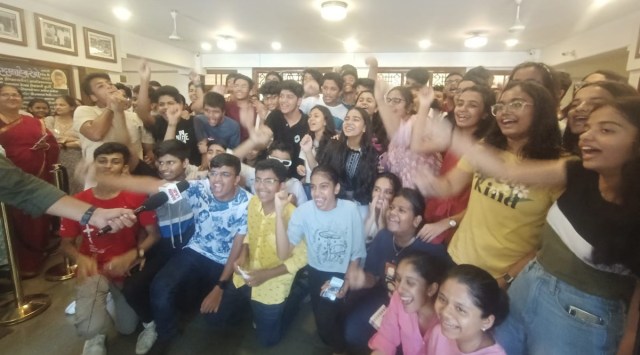
Maharashtra Board SSC 10th Result 2023: The verification process will begin on June 3, and the mark sheet will be available on June 10.

0

Maharashtra Board SSC 10th Result 2023: The verification process will begin on June 3, and the mark sheet will be available on June 10.

Students who are unhappy with their marks in a subject can apply for verification at verification.mh-ssc.ac.in (Express photo).


Introduction:


The Maharashtra State Board of Secondary and Higher Secondary Education (MSBSHSE) has announced the timeline for the verification process and the availability of mark sheets for the Maharashtra Board SSC 10th Result 2023. As per the official notification, the verification process for students' results will commence on June 3. Furthermore, students can access their mark sheets online from June 10 onwards. This article provides an overview of the verification process and the timeline for accessing the mark sheets.


Verification Process for Maharashtra SSC 10th Result 2023:


The verification process is an important step undertaken by the education board to ensure the accuracy and authenticity of the students' SSC exam results. It allows students to review their marks and request any necessary corrections or clarifications. The process typically involves the following steps:


1. Online Application:

Students who wish to verify their Maharashtra SSC 10th results must submit an online application through the official MSBSHSE website. The application form will be available on the designated portal, and students need to fill in the required details accurately.


2. Submission of Documents:

Along with the application, students may be required to provide supporting documents, such as their original mark sheets, admit cards, and any other relevant certificates. These documents serve as evidence for the board to cross-verify the requested changes or corrections.


3. Payment of Fees:

A nominal fee is usually charged for the verification process, which students are required to pay online during the application submission. The fee amount and payment instructions will be specified by the MSBSHSE.


4. Review and Correction:

Once the application and supporting documents are submitted, the board will thoroughly review the student's request. The concerned authorities will cross-check the marks awarded and make any necessary corrections if discrepancies are found.


Availability of Mark Sheets:


After the completion of the verification process, students can access their updated mark sheets online. The mark sheets will be made available on the official MSBSHSE website, and students can download them by entering their relevant credentials. The mark sheets will contain the corrected marks, if any, as well as the overall result status.


Timeline for Verification and Mark Sheet Availability:


1. Verification Process:

- Start Date: June 3, 2023

- Application Submission Deadline: To be announced by MSBSHSE

- Document Submission Deadline: To be announced by MSBSHSE


2. Mark Sheet Availability:

- Release Date: June 10, 2023

- Access Method: Online through the official MSBSHSE website


Conclusion:


The verification process and availability of mark sheets for the Maharashtra Board SSC 10th Result 2023 provide students with an opportunity to review and rectify any discrepancies in their exam results. It is crucial for students to follow the specified timeline and guidelines outlined by the MSBSHSE to ensure a smooth and hassle-free process. The board's commitment to transparency and accuracy in result declaration is commendable and ensures that students receive their rightful recognition for their hard work and dedication.

Maharashtra SSC Pass Percentage Drops by 3.18%; Officials Cite Pandemic School Closures

0

 Maharashtra SSC Pass Percentage Drops by 3.18%; Officials Cite Pandemic School Closures


state board result 2023


The Maharashtra State Board of Secondary and Higher Secondary Education (MSBSHSE) recently announced that the pass percentage for the Secondary School Certificate (SSC) examinations has witnessed a significant decline. The pass rate has dropped by 3.18% compared to previous years. Education officials in Maharashtra attribute this decline to the prolonged closure of schools due to the ongoing COVID-19 pandemic. The disruption caused by the pandemic has had a profound impact on the education system, affecting students' academic performance across the state.

Body:

1. Pandemic-induced school closures:
The COVID-19 pandemic led to the closure of educational institutions in Maharashtra, disrupting the regular academic schedule. Schools were shut down to mitigate the spread of the virus and protect the health and safety of students. This prolonged closure had an adverse effect on the overall learning process, resulting in reduced academic engagement and a decline in student performance.

2. Challenges of remote learning:
With physical classes suspended, students had to transition to remote learning methods such as online classes and digital platforms. However, this shift presented several challenges, especially for students from economically disadvantaged backgrounds who lacked access to digital devices and reliable internet connectivity. The absence of face-to-face interaction with teachers and limited access to resources further impacted students' ability to comprehend and retain the curriculum effectively.

3. Psychological impact on students:
The pandemic and its associated uncertainties have taken a toll on students' mental health and well-being. The sudden disruption of their daily routines, isolation from peers, and the anxieties surrounding the pandemic have contributed to increased stress and anxiety levels among students. These psychological factors can significantly affect concentration, motivation, and overall academic performance.

4. Learning loss and academic gaps:
The extended period of school closures and the shift to remote learning have led to learning loss among students. Many students struggled to adapt to the new learning environment and faced difficulties in keeping up with the curriculum. The lack of regular assessments and examinations during the closure also affected students' preparedness for the SSC exams, resulting in a decline in the pass percentage.

5. Efforts to mitigate the impact:
Recognizing the challenges faced by students, the Maharashtra government and education authorities have taken steps to mitigate the impact of the pandemic on education. Measures such as the distribution of study materials, conducting online classes, and implementing remedial programs have been implemented to support students in their academic journey.

Conclusion:

The decline in the pass percentage of Maharashtra SSC exams by 3.18% is a direct consequence of the pandemic-induced school closures and the challenges associated with remote learning. The educational authorities need to continue their efforts in bridging the learning gaps, providing academic support, and prioritizing the mental well-being of students. As the situation gradually improves, it is crucial to develop effective strategies to ensure that students receive quality education and regain their academic momentum in the post-pandemic era.

Sub Inspector Recruitment Exam 2021 Result Declared - Check Your Result Easily!

0

Sub Inspector Recruitment Exam 2021 Result Declared - Check Your Result Easily!


Introduction:

The long-awaited moment has finally arrived for the aspiring candidates who appeared for the Sub Inspector Recruitment Exam in 2021. The much-anticipated result of the exam has been officially released, bringing an end to the suspense and paving the way for the next phase of the selection process. In this article, we will guide you through the process of checking your result quickly and easily. So, without further ado, let's dive in!


Step-by-Step Guide to Checking Your Result:

1. Visit the Official Website: 

Start by visiting the official website of the recruiting organization or department responsible for conducting the Sub Inspector Recruitment Exam 2021. Look for the "Results" or "Recruitment" section on the homepage. 


2. Locate the Result Notification:

Once you have accessed the relevant section, keep an eye out for the notification regarding the Sub Inspector Recruitment Exam 2021 result. It might be displayed as a separate link or as part of a larger announcement.


3. Click on the Result Link:

Click on the result link provided in the notification. It will redirect you to a new page where you can access the result.  


>>>>>RESULT LINK<<<<<


4. Enter Your Credentials:

On the result page, you will likely be required to enter your credentials, such as your registration number or roll number, along with your date of birth or password. Ensure that you enter the details correctly to avoid any inconvenience.


5. View and Download Your Result:

Once you have entered the necessary information, click on the "Submit" or "View Result" button. Your Sub Inspector Recruitment Exam 2021 result will be displayed on the screen. Take a moment to verify your personal details and carefully review your result.


6. Save and Print Your Result:

To keep a record of your result, it is recommended to save a digital copy on your computer or mobile device. You can either take a screenshot or download the result as a PDF file. Additionally, it is advisable to print a hard copy of the result for future reference and documentation purposes.


7. Check for Further Instructions:

Along with the result, there may be additional instructions or guidelines provided by the recruiting organization. Make sure to read them thoroughly and note down any important dates or requirements for the subsequent stages of the selection process.


8. Contact the Authorities (if necessary):

In case you encounter any discrepancies or have queries related to your result, do not hesitate to contact the authorities responsible for conducting the exam. They will be able to assist you and provide clarification on any concerns you may have.


Conclusion:

Congratulations to all the candidates who have successfully cleared the Sub Inspector Recruitment Exam 2021! We hope this step-by-step guide has helped you navigate through the process of checking your result easily. Remember to stay updated with the further stages of the selection process and prepare diligently for the upcoming challenges. Wishing you all the best for your future endeavors as you progress in your journey towards becoming a Sub Inspector.

"41 Lakh Liters Drained for a Phone: Food Inspector Suspended and Fined for Wasting Water"

0

 "41 Lakh Liters Drained for a Phone: Food Inspector Suspended and Fined for Wasting Water"


A food inspector named Rajesh Vishwas in Chhattisgarh, India, was suspended for draining 41 lakh liters of water from a reservoir to retrieve his expensive smartphone.


Vishwas accidentally dropped his smartphone worth ₹1 lakh into the stilling basin of the dam's waste weir while taking a selfie with friends at the Paralkot Reservoir of Kherkatta Dam in Koilibeda block of Kanker district.


Local divers attempted to find the phone but were unsuccessful, so Vishwas decided to use two diesel pumps to continuously drain the water for four days until he retrieved his phone.


The drained water was enough to irrigate 1,500 acres of farmland and is also a source of water for animals and local farmers.


Vishwas claimed he had official departmental data on his phone and that the water he drained was "unusable."


The water resources department later stated that Vishwas did not seek permission from the "competent authority" to drain the water, which is illegal under the Chhattisgarh Irrigation Act.


Vishwas has been fined ₹43,000 for wasting 4.1 million liters of water and an additional ₹10,000 for evacuating water without permission.


The senior officer who allegedly gave Vishwas verbal permission to drain the water has been fined ₹53,000 for ordering the draining of the dam.


An investigation was initiated, and a show cause notice was issued to the senior officer responsible for granting permission.

Copyright © News Dekho

Sponsored By: GratisDesigned By: Habib Blog